 Chandler Pool Acid Wash
Pool Acid Wash in Chandler, AZ
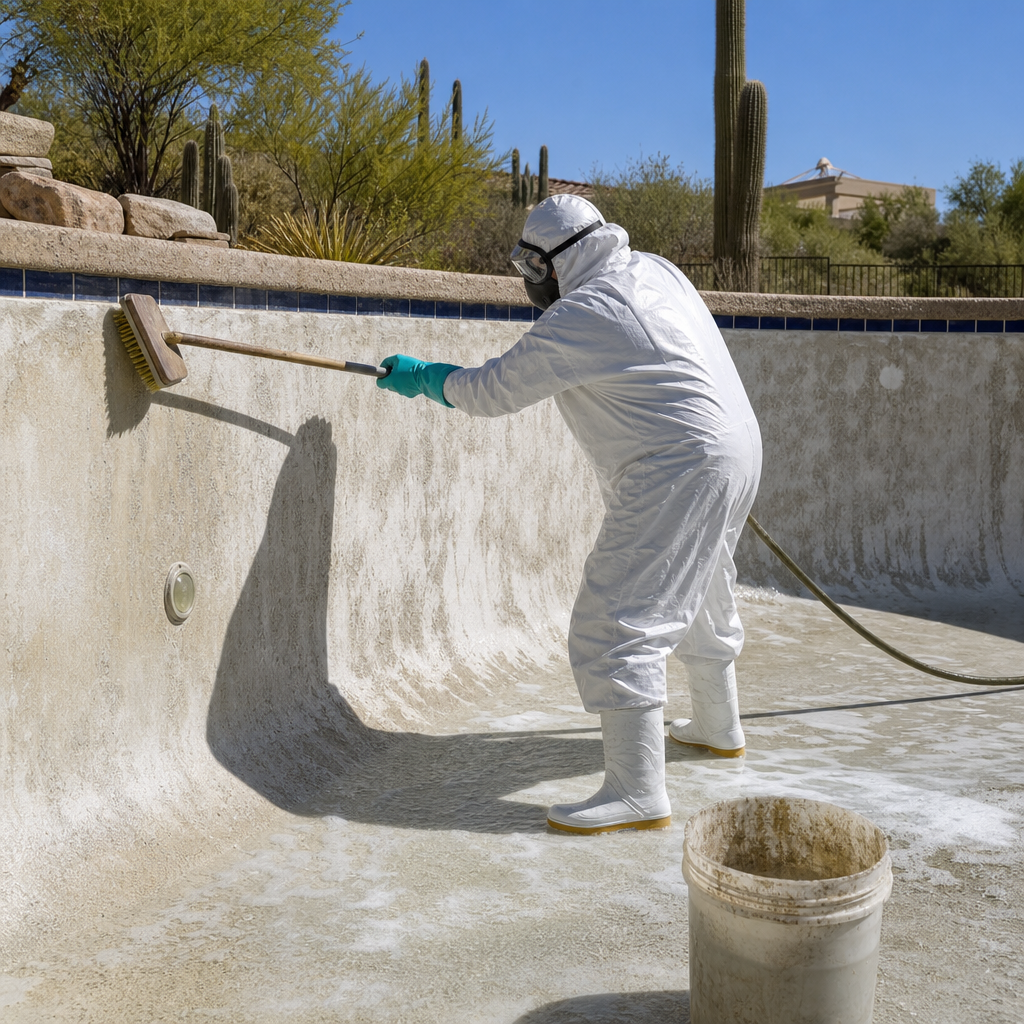
A pool acid wash in Chandler restores a stained, dull, or algae-green plaster pool to fresh white surface: by draining it, washing the bare plaster with a diluted muriatic acid solution, neutralizing, running a chlorine bath, and refilling. It typically costs $300–$800, or $700–$1,200+ for larger luxury pools. It’s the single most cost-effective way to make an old pool look new without resurfacing.
What an acid wash is (and isn’t)
An acid wash is a periodic restoration, done every few years, not weekly cleaning and not a chemical shock. It’s for a pool that brushing and chemicals can’t fix anymore: years of calcium scale, iron and organic staining, mottled plaster, or a full green algae bloom.
Here’s the mechanism. With the pool drained to bare plaster, a controlled acid-and-water solution goes on. The acid eats through surface stains and calcium and takes off a thin top layer of old, discolored plaster, exposing the clean white surface underneath. That’s why it works so well and also why it can’t be done indefinitely: there’s only so much plaster to remove.
The process, step by step
- Free photo quote. You send a photo of the whole pool, a close-up of the worst staining, and the waterline tile. We come back with a flat price.
- Draining, done legally. The City of Chandler wants pool water kept on your property or sent to your sanitary sewer cleanout, typically a black 3 or 4 inch capped pipe close to the house, and recommends no more than 12 gallons per minute. A hard-plumbed line to the street is prohibited, and draining to the street needs an exception requested from the city. Draining a residential pool takes several hours.
- Protect the plaster. We keep the surface wet and work it in sections, in the cooler part of the day, so it never dries out and etches unevenly. This is the step generalists skip and it’s where surfaces get ruined.
- Acid wash. The diluted muriatic solution (commonly around 1:1 to 1:4 acid-to-water depending on the surface and staining) goes on, and we scrub and rinse it section by section.
- Neutralize and dispose. We neutralize the acidic runoff with soda ash and pump the waste out responsibly, not into the street.
- Chlorine bath and refill. A chlorine bath sanitizes the fresh surface, then the refill starts from the hose.
- Rebalance. Once it’s full, the chemistry (pH, alkalinity, calcium hardness, chlorine) comes back into range so the surface is protected and the water’s swimmable.
Why Chandler pools stain and scale in the first place
Chandler’s tap water is hard, loaded with dissolved minerals. In the desert heat, pool water evaporates constantly and the calcium left behind concentrates and cements onto the plaster and waterline tile. That’s the white crust you see. On top of that, the intense sun bakes in sunscreen, leaves, and organic stains, and metals like iron and copper (from fill water or old plumbing) leave brown and green streaks. Acid washing takes all of it off at once.
Pools in older central Chandler (1970s and 80s plaster off Arizona Avenue, Alma School, and Dobson) tend to be on the thinner side and closer to needing a resurface. Newer pebble and quartz pools in Ocotillo, Fulton Ranch, and Clemente Ranch hold up longer but collect calcium at the tile line just the same.
The honest limit on acid washing
Here’s what most companies won’t say: you can only acid wash a pool so many times. Every wash removes plaster. Over a surface’s 10–20 year life, that’s a handful of washes at most, roughly one every 3–5 years. Push past that and each wash eats into thinning plaster, exposing the rough aggregate underneath and shortening the surface’s life.
When the plaster’s already thin or mottled, another wash is throwing money away, and resurfacing prep plus a new finish is the better spend. We tell you that and give up the wash.
When an acid wash is the right call
- Widespread calcium scale on the plaster, not just the tile
- Iron, copper, sunscreen, or organic staining across the surface
- A pool coming out of a green algae bloom that’s stained the plaster
- Prepping the surface tone before selling a home
- A plaster surface that’s dull but still has good thickness left
If your pool just has debris and mild algae with clean plaster underneath, you may only need a drain-and-clean, cheaper, and no plaster removed. Photos usually show which you need.
Acid washing pebble and quartz pools
A lot of newer Chandler pools, especially out in Ocotillo, Fulton Ranch, and Clemente Ranch, have pebble or quartz finishes rather than old white plaster. These can be acid washed, but they call for a lighter touch and more skill. Pebble finishes have exposed aggregate that reacts differently to acid than smooth plaster, so a milder concentration and careful work are the norm, lifting calcium and light staining without over-etching the exposed stone. Heavy calcium on a pebble pool is often better handled by bead blasting the tile line and treating the surface gently rather than a hard acid wash. If you have a pebble pool, say so with your photos, because it changes how the job is approached.
Two cases that change the plan: fiberglass and black algae
Fiberglass is the one surface that should never be acid washed. A fiberglass pool is lined with a smooth gelcoat skin, and acid strips it, permanently dulling a coating that can’t be spot-repaired the way plaster can. A stained or chalky fiberglass shell calls for a gentler clean-and-polish approach, so mention up front that your pool is fiberglass, and nobody should quote it a wash it should never get.
Black algae is the other special case. Those dark, tar-like spots aren’t ordinary green algae, black algae anchors roots into the pores and cracks of plaster and shrugs off the shock treatments that clear a green bloom. When a Chandler pool has established black algae colonies, draining the pool and acid washing the surface is often the only way to strip out the rooted layer rather than just knocking the spots back for a few weeks. If you’re seeing black spots that return after every treatment, say so with your photos, it changes both the method and the quote.
How long it takes and what to expect
Plan on a couple of days from start to swimmable. The drain alone takes several hours, the wash and neutralize is roughly a day of work, and refilling from the hose takes a day or more depending on pool size. During the process the pool is empty, so we schedule the job to minimize the time the shell sits in the sun. You don’t need to be home for most of it. Many owners just leave the gate accessible and get photo updates. Once it’s refilled the chemistry should come back to a balanced, swimmable range so you’re not left guessing.
Get a flat acid wash quote
Send a few photos for a flat price and a date from us, plus an honest read on whether an acid wash or a resurface is the smarter move for your Chandler pool. Every quote is free.
Frequently Asked Questions
How much does an acid wash cost in Chandler?
Typically $300–$800 for a standard residential pool, and $700–$1,200 or more for larger, heavily stained luxury pools. Price depends on pool size, plaster condition, and stain severity. Quotes are flat from photos.
How often should I acid wash my pool?
Roughly every 3–5 years for a plaster pool, or sooner as a rescue if it goes green or gets badly stained. More often than that just wears out the plaster, since each wash removes a thin layer.
Can every pool be acid washed?
Most plaster, pebble, and quartz pools can, but only a limited number of times over their life. If your plaster is already thin or showing aggregate, resurfacing prep is the better call than another wash.
Do you handle the draining and refilling?
Yes. The water goes to your sanitary sewer cleanout, as Chandler asks; then comes the wash, a chlorine bath, and the start of the refill. The city water for refilling is on your bill, so ask for an estimate first.
Can a fiberglass pool be acid washed?
No, and anyone who offers to should worry you. Acid attacks the gelcoat that gives a fiberglass shell its smooth finish, and that damage doesn't buff out. Fiberglass gets a gentler cleaning process instead. Acid washing is for plaster, pebble, and quartz surfaces.
Does an acid wash quote include the spa, the refill, and the start-up chemicals?
It should, and a good quote says so line by line. An attached spa that spills over into the pool holds the same water, so it drains with the pool and gets washed in the same trip; the spillway and spa waterline usually carry the heaviest scale. Refilling a just-washed pool is not only turning on the hose: the fill water is tested and balanced, chlorine brought up, and the freshly exposed plaster brushed for the first several days. Ask whether that start-up is in the price or billed after, whether the water goes to the sewer cleanout or elsewhere, and whether a filter cleaning is included or optional. Comparing quotes is easier when each one lists the same steps.